🌿 forget-me-not
🎨 Color Palette
About forget-me-not
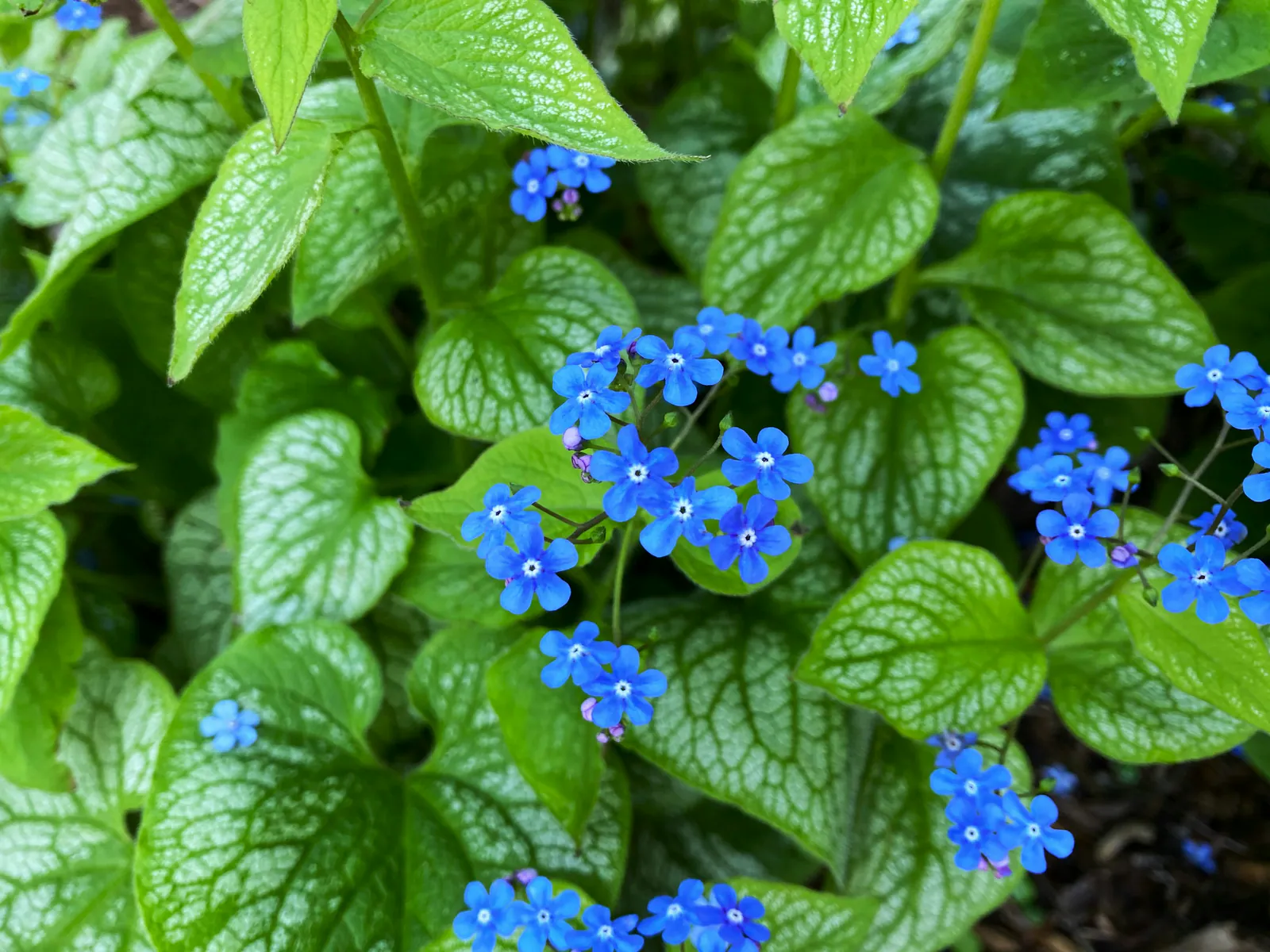
Forget-me-not is the common name for several species of the genus Myosotis (Boraginaceae), most commonly wood forget-me-not (Myosotis sylvatica) in gardens. It is a small, slightly hairy, short-lived perennial that is often grown as a biennial. Plants form low clumps or rosettes of narrow, lance-shaped leaves and produce slender, branched stems bearing airy sprays of small, five-petaled flowers in spring and early summer. Flowers are usually bright blue with a distinct yellow "eye", although pink and white-flowered forms are found in cultivation. Mature plants usually reach a height of 15-30 cm and can spread by prolific self-seeding when conditions are right.
🌱 Detailed Care Guide
📐 Growth & Structure
📅 Phenology
🌍 Ecology
✨ Usage & Benefits
- ornamental
- Edible parts: flower
⚠️ Safety & Traits
🌱 Propagation
🧪 Soil & Nutrition
🐛 Pests & Diseases
📝 Expert Advice
Forget-me-nots thrive in humus-rich, moisture-holding but well-drained soil (potting soil or garden soil improved with compost/leaf mold). Forget-me-nots tolerate short periods of drought once established, but perform best with constant humidity. Avoid prolonged waterlogging by ensuring good drainage, especially in heavier clay soils. A slightly acidic to neutral pH suits them best, although they generally adapt when fertility and humidity are adequate.
Forget-me-not (Myosotis; most often grown as wood forget-me-not, Myosotis sylvatica) is generally grown from seed and treated as a biennial/short-lived perennial. When to sow: - Late spring to midsummer (after flowering): sow plants that will overwinter and flower the following spring (usual method). - Early autumn (mild climates): sow for plants that will overwinter; protect young plants from heavy frosts. - Under cover: sow in trays/modules for later transplanting when conditions are right. How to sow (pots/trays/modules): - Use a fine, non-draining potting soil; moisten before sowing. - Sow thinly on the surface and press down; cover with a very light layer of compost/vermiculite (seeds germinate better when covered with a light or minimal layer). - Maintain regular humidity; avoid letting the surface dry out. - Maintain a cool environment (approx. 15-20°C) and bright light; germination generally takes 1-3 weeks. How to sow (directly outdoors): - Prepare fine soil; remove weeds and firm slightly. - Spread the seeds thinly, press down and cover very lightly. - Water with a fine rose and keep the seedbed constantly moist. Transplanting, thinning and planting: - When seedlings are large enough to handle, transplant them into modules/pots or thin out direct seedlings to prevent overgrowth. - Harden container-grown seedlings before planting. - Plant in moist but well-drained soil, in sun or partial shade; space out at around 15-20 cm. Remarks: - Forget-me-nots are self-seeding. To limit spread, cut off before seeds form; to naturalize, leave a few seed heads to mature.
Forget-me-nots (Myosotis spp., often cultivated as Myosotis sylvatica) feed lightly and generally flower best in moderately fertile soil. Incorporate compost or well-decomposed organic matter before planting; this is usually enough for the season. If plants are in very poor soil or if growth is pale/weak, apply a light coat of a balanced, slow-release fertilizer (e.g. about 5-5-5 or 10-10-10) at planting time or in early spring, and avoid repeated applications. Don't use fertilizers with high nitrogen content, which can promote lush foliage at the expense of flowers. In containers, use a balanced liquid fertilizer in half doses every 2 to 4 weeks during active growth, then stop once flowering is complete.
Apply a fine organic mulch (approx. 2-5 cm / 1-2 in) such as compost, leaf mould or fine bark to keep the soil evenly moist and suppress weeds. Keep mulch back from the crown/stems to reduce the risk of rotting, and avoid mulch that is too thick, which could smother rosettes/young plants or prevent self-seeding. Cool slightly in spring; in colder climates, a light winter mulch can help protect crowns, but should be loosened or removed when new growth resumes.
Forget-me-nots (Myosotis spp.) require minimal pruning. Cut off spent flowers to prolong flowering and limit self-seeding; leave a few seed heads if you want the plants to naturalize. After main flowering, shear or cut back plants just above basal foliage (or close to ground level) to order growth and encourage the appearance of new leaves; remove any yellowing, damaged or diseased foliage. Thin out overcrowded clumps to improve air circulation and reduce the risk of mildew. Divide only when necessary (some types are short-lived), replanting vigorous young shoots rather than old woody centers.
🤝 Companion Plants
These plants grow well together:
📖 View Complete Guide
For the full interactive experience with additional photos, personalized advice, and gardening tools:
Visit Aphylia →