🌿 Aglaonema
🎨 Color Palette
About Aglaonema
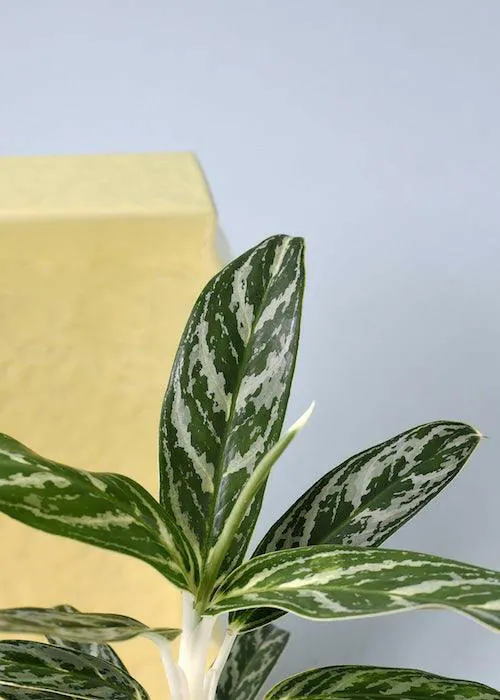
Aglaonema 'Stripes', (Araceae), is a compact evergreen plant selected for its decorative variegation. It forms a clump from short, cane-shaped stems, bearing glossy, deep-green elliptical leaves marked with regular, narrow silver stripes along the veins. Like other Aglaonema, it is grown primarily for its foliage, although mature plants can occasionally produce the typical aroid inflorescence: a pale spathe surrounding a spadix.
🌱 Detailed Care Guide
📐 Growth & Structure
📅 Phenology
🌍 Ecology
✨ Usage & Benefits
- ornamental
⚠️ Safety & Traits
🌱 Propagation
🧪 Soil & Nutrition
🐛 Pests & Diseases
📝 Expert Advice
Use a loose, airy houseplant mix that drains well but retains moisture. A peat- or coco-based substrate amended with perlite/potato and a little fine orchid bark works well; avoid heavy garden soil. Potting soil should be regularly moist, but never soggy; it should drain freely. A slightly acidic to neutral pH is suitable.
Aglaonema cultivars such as "Stripes" are almost never grown from seed; they are normally propagated by division or cuttings. When attempting to sow (rare): - Use only fresh, ripe seeds; viability diminishes rapidly. - Sow on the surface of a fine, sterile seed starting mix (e.g. peat/coco + perlite), then cover very lightly (1-3 mm) with mix or vermiculite. - Keep soil evenly moist (not soggy) and warm: 24-29°C (75-85°F). Provide bright, indirect light. - Maintain high humidity (propagator or covered tray) with regular ventilation to reduce fungal problems. - Germination is variable; repot seedlings individually once they have several true leaves. Recommended planting/propagation (most reliable): - Division: When repotting, separate basal shoots with their own roots; repot immediately. - Stem cuttings: Take a healthy section of cane with at least one node; root in moist sphagnum peat moss or a mixture of peat and coco-perlite at 22-27°C (72-81°F) with high humidity. Keep the medium just moist. Notes on potting and planting: - Use a free-draining aroid mix (e.g. peat/coco + bark + perlite) in a pot with drainage. - Plant so that the crown is level with the previous crop; firm up gently. - After planting, water abundantly, then allow the top few centimetres of the mixture to dry slightly before watering again. - Place the plant in bright, indirect light; avoid direct sunlight. Maintain warm temperatures (ideally 18-27°C / 65-81°F) and moderate to high humidity.
Light feeding: during the active growth period (spring to early autumn), apply a balanced liquid houseplant fertilizer (e.g. 10-10-10 or similar) diluted 1/4-1/2 about every 4-6 weeks. If growth is slow or light is poor, reduce the frequency. Give no fertilizer or much less in winter. Avoid over-fertilization (Aglaonema is salt-sensitive); water abundantly to allow excess to drain away, and rinse the pot periodically with clear water to avoid fertilizer and salt build-up. A low-dose, slow-release fertilizer can be used instead, applied at the lowest indoor dose indicated on the label.
Prune mainly to eliminate aging foliage and maintain a compact shape. Using clean, sharp pruning shears, cut off yellowed, damaged or diseased leaves by severing the petiole near the stem without tearing the tissue. If the plant becomes too tall or stocky, cut the stems just above a node; new shoots usually emerge from the lower nodes. Removed stems can be rooted as cuttings if desired. Remove spent inflorescences (flowers/berries) to redirect energy to the foliage. Carry out major pruning in spring and early summer, when growth is most active; avoid heavy pruning in winter and never remove more than a third of the plant at a time. Disinfect tools between cuts to reduce the risk of spreading disease.
🤝 Companion Plants
These plants grow well together:
📖 View Complete Guide
For the full interactive experience with additional photos, personalized advice, and gardening tools:
Visit Aphylia →