🌿 Aubrieta
🎨 Color Palette
About Aubrieta
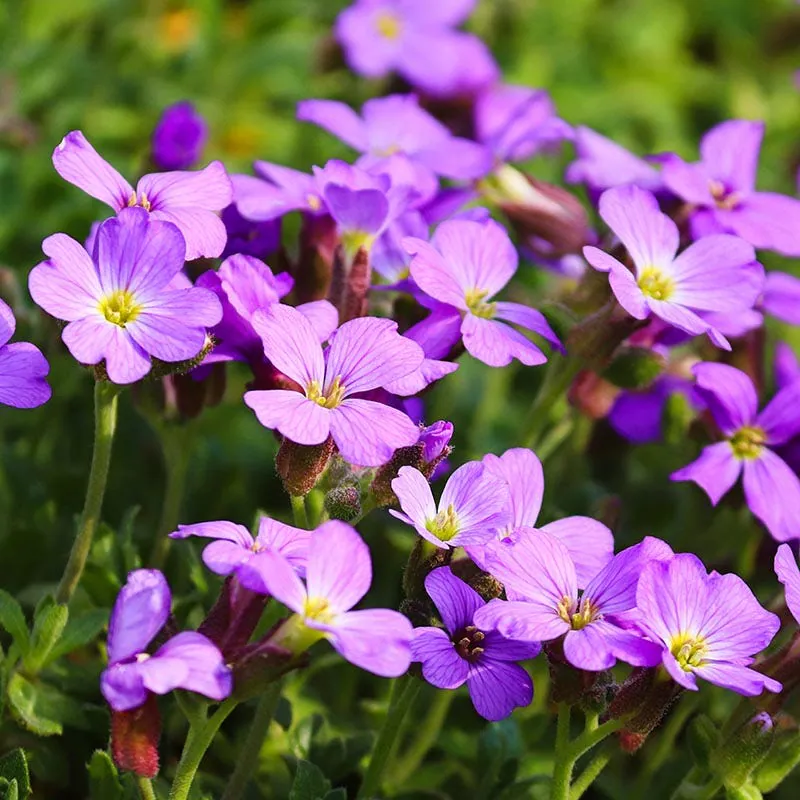
Aubrieta is a small genus of low, mat-forming perennials in the cabbage family (Brassicaceae), grown mainly for their spring exposure and ability to form a dense, weed-suppressing ground cover. In horticulture, the name most often refers to Aubrieta deltoidea and a wide range of hybrids and garden cultivars derived from it. The plants form spreading cushions a few centimetres high, with slender, branched and somewhat woody stems, and small grey-green to green, usually slightly hairy leaves. In early to mid-spring, Aubrieta produces masses of small, four-petaled, cross-shaped flowers just above the foliage. Colors are usually purple, lilac and pink, but there are also white-flowered varieties. Flowering can be so abundant that the foliage is largely hidden.
🌱 Detailed Care Guide
📐 Growth & Structure
📅 Phenology
🌍 Ecology
✨ Usage & Benefits
- ornamental
⚠️ Safety & Traits
🌱 Propagation
🧪 Soil & Nutrition
🐛 Pests & Diseases
📝 Expert Advice
Grow aubrieta in very well-drained, aerated soil; it performs best in the light, granular substrates typical of rock gardens, wall crevices and slopes. Neutral to alkaline soils (including those based on chalk or limestone) suit it well. Avoid heavy, compact clay and especially winter waterlogging; improve drainage by incorporating sand or gravel and planting on raised areas or mounds. Maintain moderate fertility - a little organic matter is acceptable, but overly rich, moisture-retaining soils reduce flowering and can lead to rot.
Seeds can be sown under cover from late winter to spring, or from late summer to early autumn, for planting the following spring. Sow thinly on the surface of a fine, draining potting soil (or cover only very lightly), as light encourages germination. Close gently, water with a fine rosette or a mist sprayer, and maintain regular, but never soggy, humidity. Maintain a cool, bright spot; germination generally takes 2-3 weeks at a temperature of around 15-20°C. When seedlings are large enough to handle, transplant them into pots or cell containers and grow in good light, with careful watering and good ventilation. Harden off gradually. Plant out after the risk of heavy frosts has passed, spacing plants about 20-30 cm apart. Choose full sun and well-drained, moderately fertile soil (often limestone-tolerant). Avoid heavy, damp soils; improving drainage with gravel is beneficial in containers or beds with poor drainage.
Aubrieta feeds lightly and flowers best in relatively lean, well-drained soil. Avoid routine fertilizers, especially those with a high nitrogen content, which promote sluggish leaf growth and less abundant flowering. In garden beds, if the soil is reasonably fertile, no fertilizing is generally necessary; if not, top-dress in early spring with a thin layer of compost or apply a balanced, slow-release fertilizer with low nitrogen content, respecting the dose indicated on the label. If plants appear weak or the soil is very poor, give a light fertilizer immediately after flowering to encourage regrowth, then stop fertilizing in mid-to-late summer to allow growth to harden off before winter. In containers, use a dilute, balanced liquid fertilizer (about 1/4-1/2 of the dose) every 3-4 weeks during active growth in spring/early summer, and avoid overfeeding.
Mulch sparingly and keep the crown dry. Spread a thin layer of chippings, gravel or small stones around the plant (useful on heavy or wet soils in winter) to improve drainage and reduce soil splash, which helps prevent crown and stem rot. Avoid thick organic mulches (bark, leaf mold, manure) against the stems or in the center. If the soil is very poor, apply a light layer of compost in spring, after flowering, avoiding applying it to the crown of the plant.
Shear or lightly trim Aubrieta immediately after the main spring flowering to remove spent flowers and seed heads, limit self-seeding and stimulate fresh foliage and a cleaner, denser mat. Use shears to lightly prune the entire cushion, shaping and reducing any irregular growth; avoid heavily cutting back old woody centers, which often don't grow back well. Remove dead, broken or winter-damaged shoots whenever you see them. If plants become open, bare or woody with age, rejuvenate them by raising and dividing healthy sections (or replacing plants) rather than resorting to severe pruning.
🤝 Companion Plants
These plants grow well together:
📖 View Complete Guide
For the full interactive experience with additional photos, personalized advice, and gardening tools:
Visit Aphylia →