🌿 Grape hyacinth
🎨 Color Palette
About Grape hyacinth
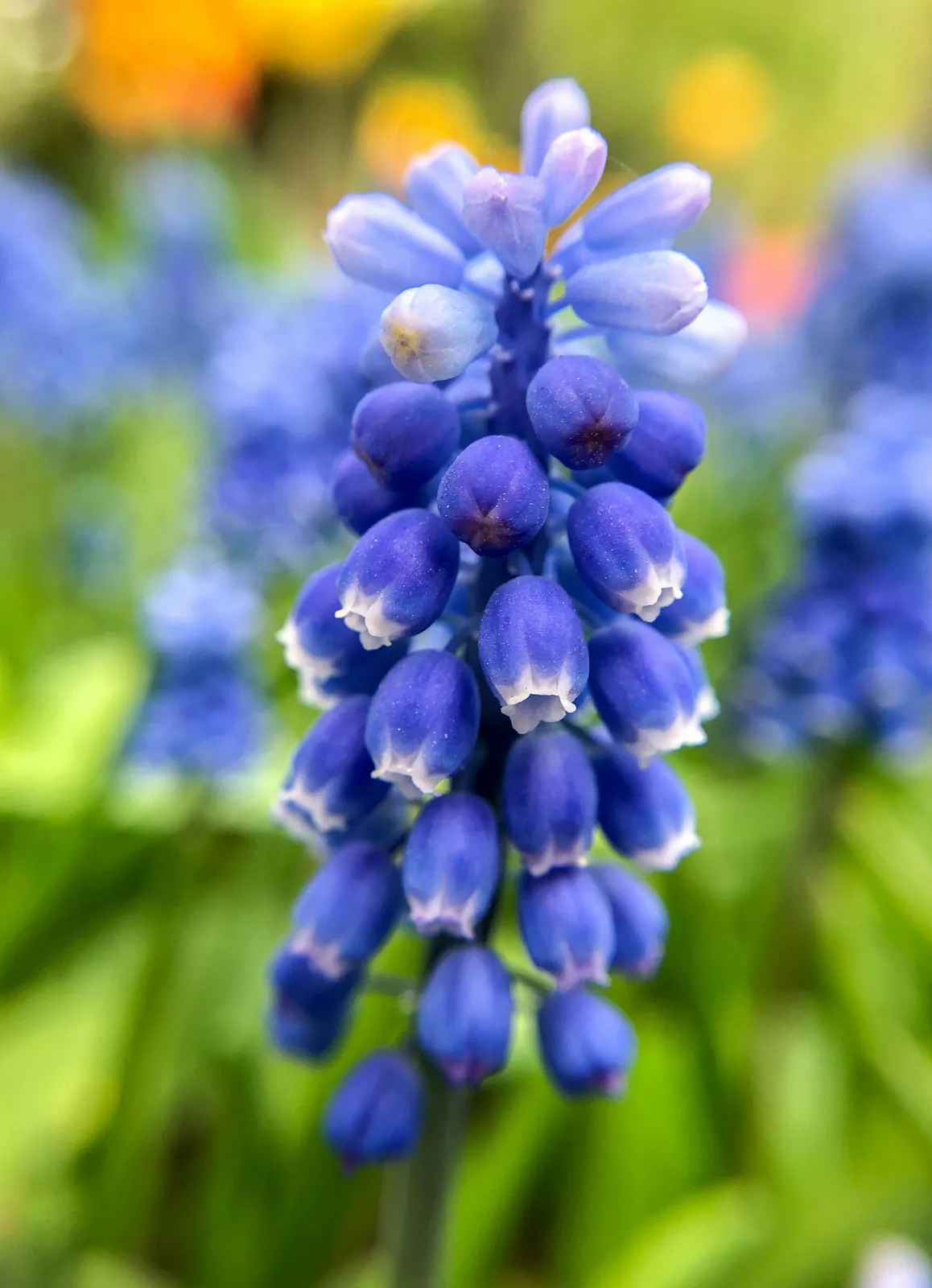
Muscari is a small, easy-to-grow bulbous plant known for its clusters of blue flowers in spring. Very hardy, it is easy to naturalize in lawns, flowerbeds and undergrowth. It is appreciated for its early flowering and its interest in pollinating insects.
🌱 Detailed Care Guide
📐 Growth & Structure
📅 Phenology
🌍 Ecology
✨ Usage & Benefits
- ornamental
- fragrant
⚠️ Safety & Traits
🌱 Propagation
🧪 Soil & Nutrition
🐛 Pests & Diseases
📝 Expert Advice
Plant Muscari in well-drained soil to prevent bulb rot. A moderately fertile potting soil or sandy/chalky soil is ideal; in case of heavy clay, incorporate coarse sand and organic matter to improve drainage and aeration. Avoid waterlogged soils, especially during the summer dormancy period; keep the soil evenly moist during active growth, then allow it to dry out. The plant performs best in neutral or slightly alkaline soil, but will tolerate a wide pH range if drainage is good; in containers, use a mixture of draining potting soil with gravel/perlite added, and make sure there are drainage holes.
Muscari is best established by planting bulbs; seeding is possible but slow and variable. Planting bulbs (recommended) - Timing: plant dormant bulbs in autumn, ideally 4-6 weeks before the ground freezes. - Location: full sun to part shade. - Soil: fertile to medium, but well-drained; avoid waterlogged soils in winter (risk of bulb rot). - Planting depth: plant with pointed end up, at a depth of approx. 7-10 cm (approx. 2-3× bulb height). - Spacing: 5-8 cm (2-3 in) apart; plant in rows or groups for best effect. - Watering: water after planting to settle the soil; thereafter, water only if the season is exceptionally dry. - Winter protection: in very cold climates, apply a light mulch after the soil has cooled/frozen to reduce freeze/thaw disturbance. - After flowering: allow foliage to die back naturally to recharge the bulb; remove spent flower stems to reduce self-seeding. - Division/succession: lift and divide crowded clumps once foliage has yellowed and died (late spring/early summer), or simply separate branches when lifting and replant in autumn. Sowing seeds (possible but slow) - Seed collection: harvest seeds when capsules dry out and start to open; sow fresh for best results. - When to sow: sow in pots/trays outdoors in late spring/early summer after collection, or in autumn. - Medium: draining potting soil; cover seeds lightly with compost or gravel. - Need for cold: germination is often enhanced by a period of cold (outdoor winter conditions or cold stratification). - Aftercare: maintain regular, but not too high, humidity; protect from heavy rain and pests. - Transplanting: transplant seedlings when they are large enough to handle, and grow them in pots until the bulbs are large enough to be planted. - Flowering period: usually several years (often 3 to 5 years or more) from seed.
Muscari feeds little and generally needs little or no fertilizer in reasonably fertile soil. When planting, incorporate compost and/or apply a small amount of low-nitrogen bulb fertilizer (or bone meal) in the planting hole, ensuring that the fertilizer does not come into direct contact with the bulbs. For established clumps, spread compost on the surface or apply a balanced low-nitrogen bulb fertilizer in early spring, when the shoots emerge (or in autumn if the soil is poor). Avoid high-nitrogen fertilizers (including lawn fertilizers), which promote leaf growth and reduce flowering. Do not fertilize after flowering; allow foliage to photosynthesize until it turns yellow and dies back, then stop feeding. In containers, use a dilute, balanced liquid fertilizer once at shoot emergence and, if growth is weak, a second light fertilizer after flowering; avoid repeated applications.
Apply a light, draining organic mulch (compost, leaf mold or fine bark) to a depth of around 2-5 cm after planting or in autumn to conserve moisture and reduce weeds. Keep mulch within a few centimetres of the bulb collar or crown to avoid trapping moisture and promoting rot, especially on heavier soils. In cold climates, after the ground has frozen, add a slightly thicker winter mulch to limit frost heave and thawing; remove it in late winter or early spring when shoots appear. Avoid deep mulches that retain water, and avoid heavy mulching during the summer dormancy period; on poorly drained sites, prefer a thin, granular spread rather than thick organic layers.
🤝 Companion Plants
These plants grow well together:
📖 View Complete Guide
For the full interactive experience with additional photos, personalized advice, and gardening tools:
Visit Aphylia →