🌲 Blackcurrant Bush
🎨 Color Palette
About Blackcurrant Bush
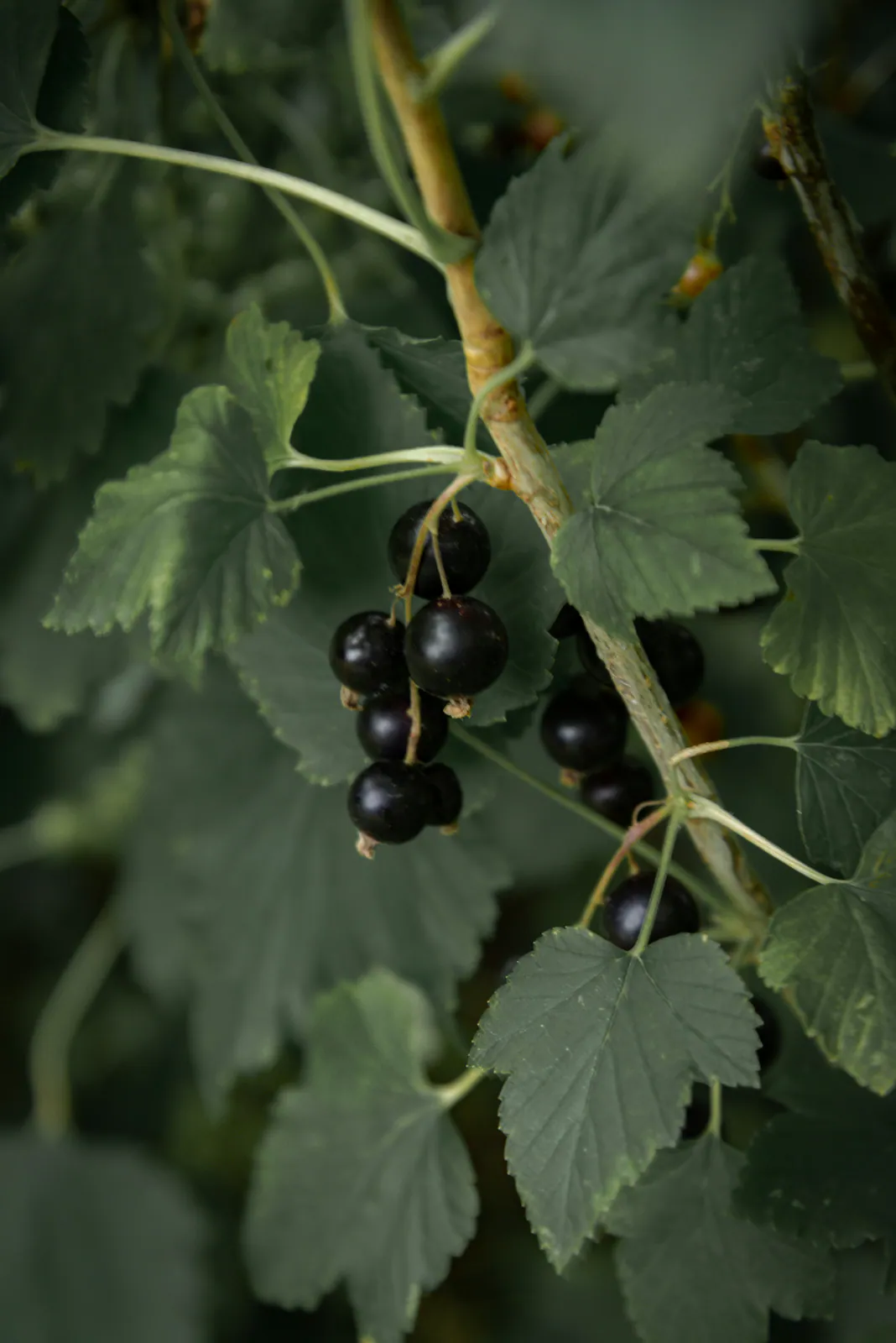
Blackcurrant (Ribes nigrum) is a deciduous fruit bush of the gooseberry family (Grossulariaceae), widely cultivated for its aromatic dark purple to black berries. Native to the temperate regions of northern and central Europe and northern Asia, it forms a multi-stemmed bush around 1-2 m high, with palmately lobed leaves that give off a characteristic fragrance when crushed. In spring, it bears hanging clusters (racemes) of small greenish to pinkish flowers, which are pollinated by insects and turn into sweet, juicy berries later in the summer.
🌱 Detailed Care Guide
📐 Growth & Structure
📅 Phenology
🌍 Ecology
✨ Usage & Benefits
- edible
- medicinal
- infusion
- Edible parts: leaf, fruit
⚠️ Safety & Traits
🌱 Propagation
🧪 Soil & Nutrition
🐛 Pests & Diseases
📝 Expert Advice
Grow in deep, fertile soil that retains moisture but is well-drained and contains plenty of organic matter (composted manure/compost). Silty soil is ideal; improve heavy clay with organic matter for drainage and structure, and avoid very light sandy soils that dry out quickly unless heavily amended and irrigated. Prefers a slightly acidic to neutral pH (around 6-6.5) but tolerates a wider range; avoid waterlogged soils.
Blackcurrant (Ribes nigrum) is usually planted as a bare-root dormant plant or propagated from hardwood cuttings; sowing is possible but slow and seedlings will not be true to parent. Planting (recommended) - Timing: Plant bare-root shrubs during the dormant period, from late autumn to early spring, avoiding frozen or waterlogged soil. Container plants can be planted almost year-round if well watered, but fall/winter planting is ideal. - Location: Full sun to light shade; best grown in sun. Choose fertile, well-drained soil that retains moisture; avoid very dry sites. - Soil preparation: Remove weeds and incorporate well-decomposed organic matter or compost. Blackcurrants prefer slightly acidic to neutral soil. - Spacing: Leave around 1.2 to 1.8 m between bushes (and the same between rows), depending on training and vigour. - Planting depth: Plant slightly deeper than in the nursery/pot (usually about 5 cm deeper) to encourage new growth from the base. - Planting method: Dig a hole wide enough to spread the roots, pack and water abundantly. Mulch after planting, ensuring that the mulch does not touch the base of the stem. - After planting/pruning: For new shrubs, cut the stems back sharply after planting (often to 2-3 buds above ground level) to encourage new growth from the base. Propagation from hardwood cuttings (common for "do-it-yourself planting") - When: Take pencil-thick, leafless hardwood cuttings in late autumn or winter. - Method: Use 20-30 cm cuttings from the current season's wood; cut just below a bud at the base and just above a bud at the top. Insert them in a nursery bed or deep pot with a well-drained medium, so that only the top 2 or 3 buds remain above the surface. Maintain constant humidity; transplant once roots are well established. Sowing (not typical) - Seed handling: Use fresh, clean seeds. Blackcurrant seeds generally require cold stratification. - Stratification: Mix seeds with moist (not wet) medium and chill at approx. 1-5°C for 12-16 weeks. - Sowing: After stratification, sow finely on the surface of fine potting soil and cover lightly. Keep cool and evenly moist; germination often occurs in spring and may be irregular. Transplant seedlings when they are large enough to handle and cultivate, before transplanting the following dormant season.
Every winter/early spring, spread well-decomposed compost or manure around the root zone and renew organic mulch to maintain soil fertility and moisture. If growth is weak or the soil is poor, apply a balanced general fertilizer in early spring (before strong growth begins), keeping it off the stems and watering it in if it's dry. Avoid high-nitrogen fertilizers, which promote tender leaf growth at the expense of fruit; for bushes established on light soils, a high-potash spring fertilizer for fruit can help promote flowering and harvesting. Don't overfeed - blackcurrants generally grow well with an annual mulch and a modest application of fertilizer in spring, only if necessary.
Apply a thick organic mulch every year to conserve moisture, suppress weeds and nourish the shrub. From late winter to early spring, spread 5 to 8 cm of well-decomposed manure, garden compost or leaf compost over the root zone, keeping the mulch a few centimetres away from the stems to reduce the risk of rotting. Renew the mulch as it decomposes, and avoid working deeply around the plants, as blackcurrant roots are relatively shallow.
Blackcurrant (Ribes nigrum) is traditionally used for medicinal purposes, mainly for its leaves and seeds. Blackcurrant leaf (Ribes nigri folium) is used in phytotherapy as a mild diuretic ("urinary tract irrigation") and for the symptomatic relief of minor joint/muscle pain associated with rheumatism, due to its anti-inflammatory components (notably flavonoids and other polyphenols). Berries are a rich dietary source of vitamin C and anthocyanins, providing antioxidant support and traditionally used in foods/syrups against colds and sore throats. Blackcurrant seed oil contains gamma-linolenic acid (GLA) and is used as a nutritional supplement to support skin barrier function in dry/irritated skin conditions.
Blackcurrant (Ribes nigrum) leaf infusions are traditionally used as a mild diuretic to increase urinary flow and as supportive therapy for minor urinary tract ailments. Berry infusions provide polyphenols (notably anthocyanins) and some vitamin C, contributing to antioxidant activity that can be beneficial to general health (e.g. in the case of colds), although clinical evidence of the effects of tea or infusions is limited.
Prune blackcurrants (Ribes nigrum) to maintain a constant supply of vigorous young shoots, as they grow best on solid one-year-old wood (and at the base of two-year-old shoots). Timing: During the dormant period, at the end of winter (or immediately after leaf fall in mild regions). Avoid pruning during heavy frosts. After planting: During the first winter, cut back all stems to 2 buds above ground level to stimulate new growth from the base. Annual maintenance (established bushes): - Each year, remove at ground level about a third of the oldest, darkest and thickest stems (usually those over 3 years old). - Also remove any shoots that are weak, damaged, diseased, crossing, very low or touching the ground. - Keep a frame of around 8 to 12 strong stems of varying ages, most of which are 1 to 2 years old. - Do not systematically shorten vigorous new shoots; renewal is mainly achieved by removing old stems whole at the base. Renovation (neglected/growing plants): Over 2 or 3 winters, gradually remove the oldest stems at ground level to rebuild a bush dominated by young shoots; in the most severe cases, cut the entire bush at ground level in winter and allow new shoots to grow back. Hygiene: Cut cleanly at the base and remove prunings to reduce the spread of pests and diseases.
📋 Additional Information
🤝 Companion Plants
These plants grow well together:
📖 View Complete Guide
For the full interactive experience with additional photos, personalized advice, and gardening tools:
Visit Aphylia →