🌲 Currants Bush
🎨 Color Palette
About Currants Bush
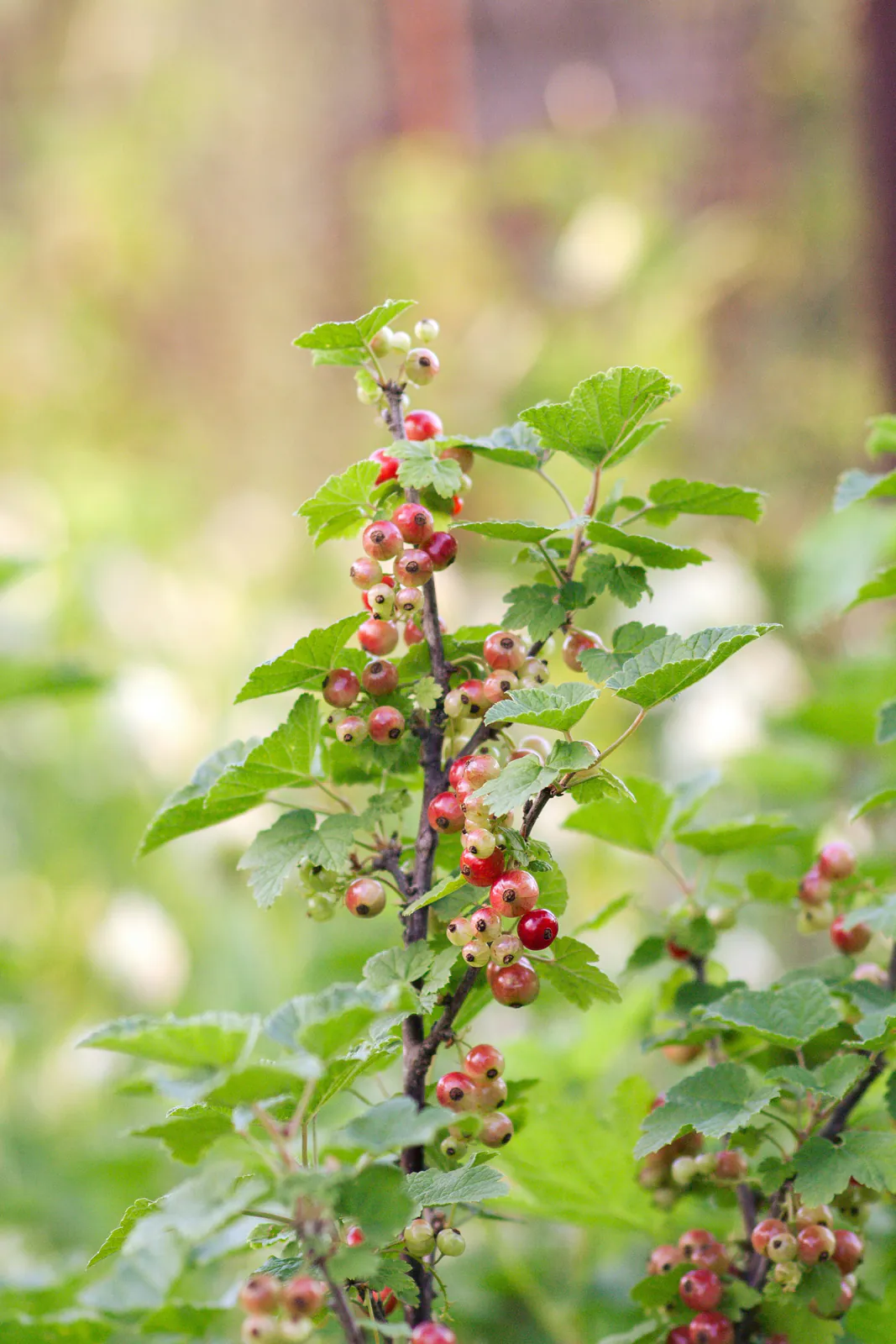
Gooseberry is a deciduous fruit bush of the Ribes genus (family Grossulariaceae), most often cultivated from forms of Ribes rubrum native to temperate Europe and parts of western Asia. It forms a compact, multi-stemmed bush, usually 1 to 1.5 m high, with palmately lobed, slightly aromatic leaves borne on short shoots. In spring, small greenish to yellowish flowers are produced in drooping racemes; these turn into bright red, translucent berries, held in long, easy-to-pick "ropes". The fruits are particularly rich in acidity and pectin, and are used fresh, in juices, jellies, sauces and pastries, often appreciated for their piquant flavor and good setting qualities.
🌱 Detailed Care Guide
📐 Growth & Structure
📅 Phenology
🌍 Ecology
✨ Usage & Benefits
- edible
- Edible parts: fruit
⚠️ Safety & Traits
🌱 Propagation
🧪 Soil & Nutrition
🐛 Pests & Diseases
📝 Expert Advice
Grow in fertile, moisture-retaining but well-drained soil (ideal: loam). Incorporate plenty of well-decomposed organic matter/compost before planting and mulch every year to conserve moisture. Prefers a slightly acidic to neutral pH; tolerates heavier clay soils if drainage is good, but avoids waterlogged sites and very dry, impoverished sandy soils.
Redcurrant (Ribes rubrum) is generally planted as a young shrub (bare-rooted or in containers) rather than grown from seed; seed propagation is slow and variable. Planting (recommended) - When to plant: Bare-root plants should be planted during the dormant season, from late autumn to early spring (generally November to March), when the soil is workable. Container-grown plants can be planted almost year-round, avoiding conditions of frost, waterlogging or drought. - Location: Full sun for best yield; light shade tolerated. Choose an open site with good air circulation to reduce disease. - Soil: Moist but well-drained, fertile soil. Improve soil with well-decomposed organic matter before planting. Avoid waterlogging. - Spacing: Leave around 1.2 to 1.5 m between bushes (more if planted in rows or cords). - How to plant: Dig a hole wide enough to spread the roots. Plant at the same depth as the previous crop (roots should be at the soil surface). Press down, water abundantly, then mulch (to avoid the mulch reaching the stem). - After planting: Water during the dry periods of the first season. At the end of the winter following planting, prune to establish a framework (remove weak/damaged shoots and shorten to encourage new shoots, following your chosen training system). Growing from seed (optional) - Seed preparation: Fresh seed generally requires cold stratification to break dormancy. - Stratification: Mix seeds with moist (not wet) sterile medium and cool to around 1-5°C for several weeks to a few months. - Sowing: After cooling, sow finely on the surface of the potting soil and cover lightly (very superficially). Germination often occurs in spring, but can be irregular. - Transplanting: Pot seedlings once they are large enough to handle; let them grow for at least 1-2 years before transplanting. Plants grown from seed may not have the same fruit quality as the mother plant.
In late winter and early spring (before growth begins), lightly apply a balanced fertilizer (e.g. 10-10-10) or a high-potash, low-nitrogen fruit fertilizer, and/or top-dress with compost or well-decomposed manure. Avoid high nitrogen inputs, which promote leaf growth at the expense of fruit, and can increase the number of soft, disease-prone shoots. On established bushes, maintain an annual organic mulch to provide nutrients and conserve moisture; reduce or eliminate fertilizer on very vigorous plants or when the soil is already fertile. If soils are acidic, correct pH with lime if necessary (do not apply lime and fertilizer at the same time).
Apply organic mulch every year to conserve moisture and eliminate weeds. In late winter or early spring (after the soil has warmed slightly), spread 5-8 cm of well-decomposed garden compost, leaf mold or well-decomposed manure over the root zone, up to the drip line. Keep the mulch a few centimetres from the stems/crowns to reduce the risk of rot, and remove perennial weeds before mulching. Fill the mulch as it decomposes; maintain an even layer during the summer, watering the soil before mulching in case of drought.
Prune redcurrants during the dormant period (late winter, before budburst). For the first 2-3 years, build an open, goblet-shaped frame: select 6-8 well-spaced main stems, remove weak or crossed shoots and suckers from the base, and shorten new main shoots by about a third to encourage branching. Once established, currant bushes fruit mainly on short shoots on older wood (2 years and older), so strive to retain productive old branches while gradually renewing them. Every winter: - Remove dead, damaged, diseased, low or crowded branches, as well as basal suckers. - Shorten most side shoots to 1 or 2 buds to form fruiting shoots. - Keep the bush open by removing 1 to 3 of the oldest stems at ground level each year and replacing them with the most vigorous young shoots (avoid removing too much old wood at once). Tip: avoid heavy pruning in spring, when sap is rising; cut straight back to a bud or branch collar.
📋 Additional Information
🤝 Companion Plants
These plants grow well together:
📖 View Complete Guide
For the full interactive experience with additional photos, personalized advice, and gardening tools:
Visit Aphylia →