🌾 Corn
🎨 Color Palette
About Corn
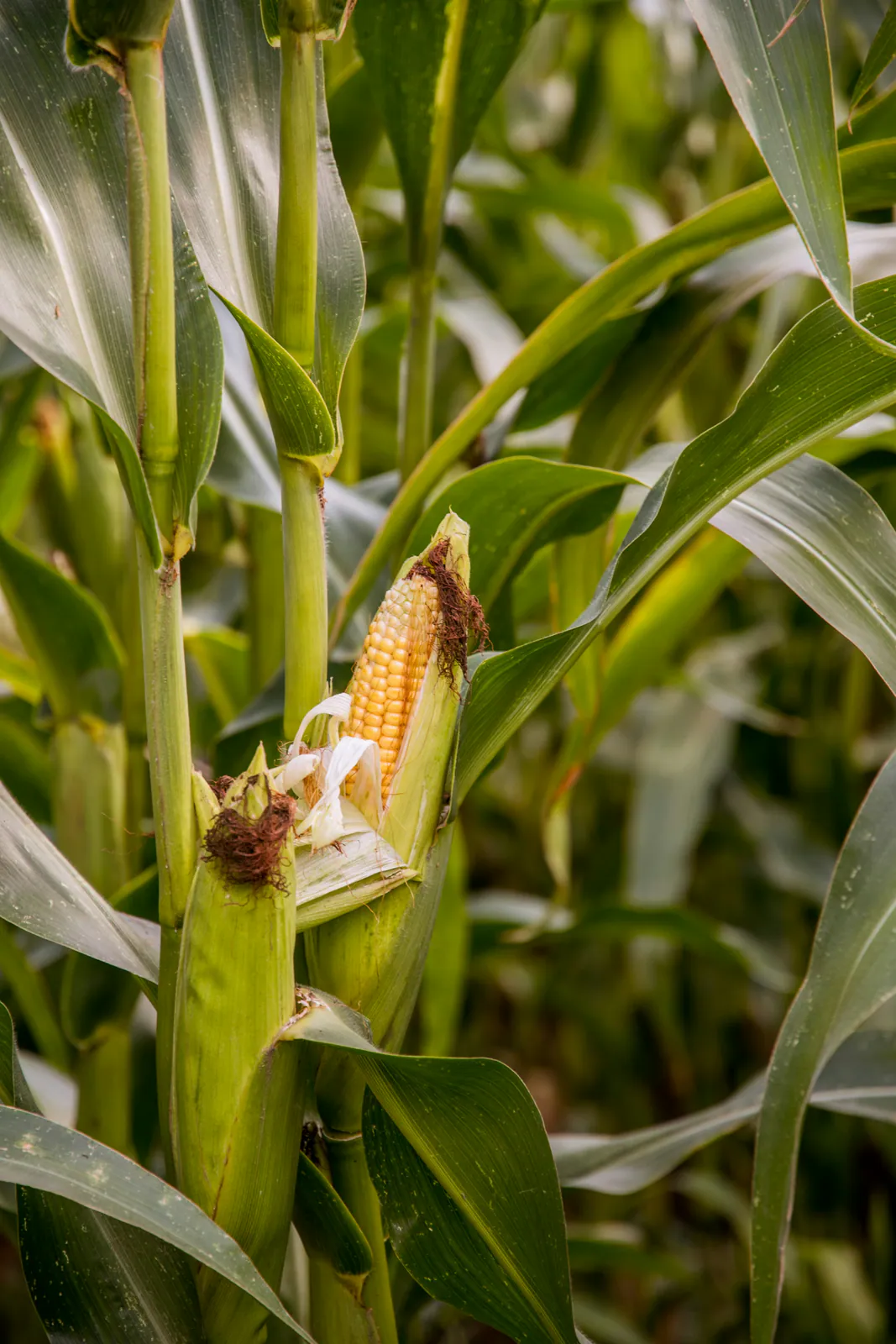
Corn (Zea mays) is a large annual grass domesticated from teosinte in Mesoamerica and now grown worldwide as one of the most important cereal crops. The plant forms a sturdy, jointed stem with broad, linear leaves and an extensive fibrous root system that can include supporting roots. Corn is monoecious: the terminal male inflorescence (the tassel) releases pollen carried by the wind, while the female inflorescences (the ears) develop in the leaf axils. Each spike bears rows of grains; the elongated bristles are the receptive stigmas, and successful pollination of each bristle is necessary for complete grain formation.
🌱 Detailed Care Guide
📐 Growth & Structure
📅 Phenology
🌍 Ecology
✨ Usage & Benefits
- edible
- cereal
- ornamental
- Edible parts: flower, fruit, seed
⚠️ Safety & Traits
🌱 Propagation
🧪 Soil & Nutrition
🐛 Pests & Diseases
📝 Expert Advice
Corn is grown in deep, fertile, well-drained soil (loam or sandy loam), well aerated and rich in organic matter. Avoid compacted or waterlogged sites; raised beds or ridges are useful in clay soils. Maintain regular humidity (soil should retain water but not be soggy). Optimum pH is slightly acidic to neutral (around 5.8-7.0). Corn is nutrient-demanding, so incorporate compost or manure before planting, and make sure there's enough nitrogen during growth.
Sow corn once all risk of frost has passed and the soil has warmed up (ideally at least 10-13°C / 50-55°F; a higher temperature is preferable for rapid germination). Choose a sunny spot with fertile, well-drained soil; incorporate compost or well-decomposed manure before planting. Direct sowing (recommended): - Sow seeds 2.5-4 cm deep in moist soil. - Space seeds 20-30 cm (8-12 in) apart in rows 60-90 cm (24-36 in) apart; thin to the strongest plant per station. - Plant in blocks (e.g. 3-6 short rows) rather than a single long row to improve wind pollination and ear filling. - Keep soil evenly moist until germination (usually 7-14 days, depending on temperature). Transplanting (optional for short seasons): - Start seeds in individual pots 2-3 weeks before last frost; sow 2.5 cm deep. - Transplant with care when seedlings are small (approx. 10-15 cm / 4-6 in high) and nights are regularly warm; avoid disturbing roots. Succession and timing: - For prolonged harvesting (sweetcorn types), carry out successive sowings every 10-14 days until midsummer, leaving enough time for the seedlings to mature before the first expected autumn frost. After emergence : - Weed early (corn is not very competitive when small) and mulch when the soil is warm. - Water regularly, especially from flowering to cob filling; dryness at flowering reduces grain formation.
Corn (Zea mays) is a major consumer of nitrogen (N). Wherever possible, fertilization should be based on soil analysis. - Before planting: Incorporate well-decomposed compost/manure to improve soil organic matter. Apply phosphorus (P) and potassium (K) at the time of planting, or before if soil analysis indicates a need; P is most critical at the beginning for root growth. - Nitrogen application timing: Split nitrogen applications to reduce losses and meet crop demand. - Apply a small amount of starter nitrogen at planting (often with P). - Apply most of the nitrogen in sidebands when plants are about 30 to 45 cm (12 to 18 inches) tall (around the V6 stage). - A second band application can be made just before rapid growth/flowering (around V10-V12) on sandy soils or where there is a risk of leaching. - Micronutrients : Ensure sufficient sulfur and zinc if deficiencies are common locally; correct according to soil/leaf analysis. - Avoid late or excessive nitrogen applications: heavy nitrogen application after flowering can increase lodging and delay maturity; over-fertilization can also increase nutrient run-off. - Watering and placement: Apply fertilizer when the soil is moist, and water after side-dressing; keep granular fertilizers a few centimetres from the stalks to avoid burning. - Practical note: Sweet corn generally benefits from regular side-dressing; container or raised-bed plantings may require lighter, more frequent application due to limited soil reserves.
Mulch corn once the soil has warmed up and seedlings are established (around 10-15 cm/4-6 in high) to avoid slowing early growth in cold soil. Apply a 5-8 cm layer of clean straw, shredded leaves or finished compost between rows to suppress weeds and conserve moisture; keep the mulch a few centimetres from the stalks to reduce rot and pest hiding places. Renew mulch as it decomposes, and avoid thick layers of fresh, high-carbon material (e.g. uncomposted wood chips) directly above the root zone, unless additional nitrogen is required.
📋 Additional Information
🤝 Companion Plants
These plants grow well together:
📖 View Complete Guide
For the full interactive experience with additional photos, personalized advice, and gardening tools:
Visit Aphylia →