🌿 bean
🎨 Color Palette
About bean
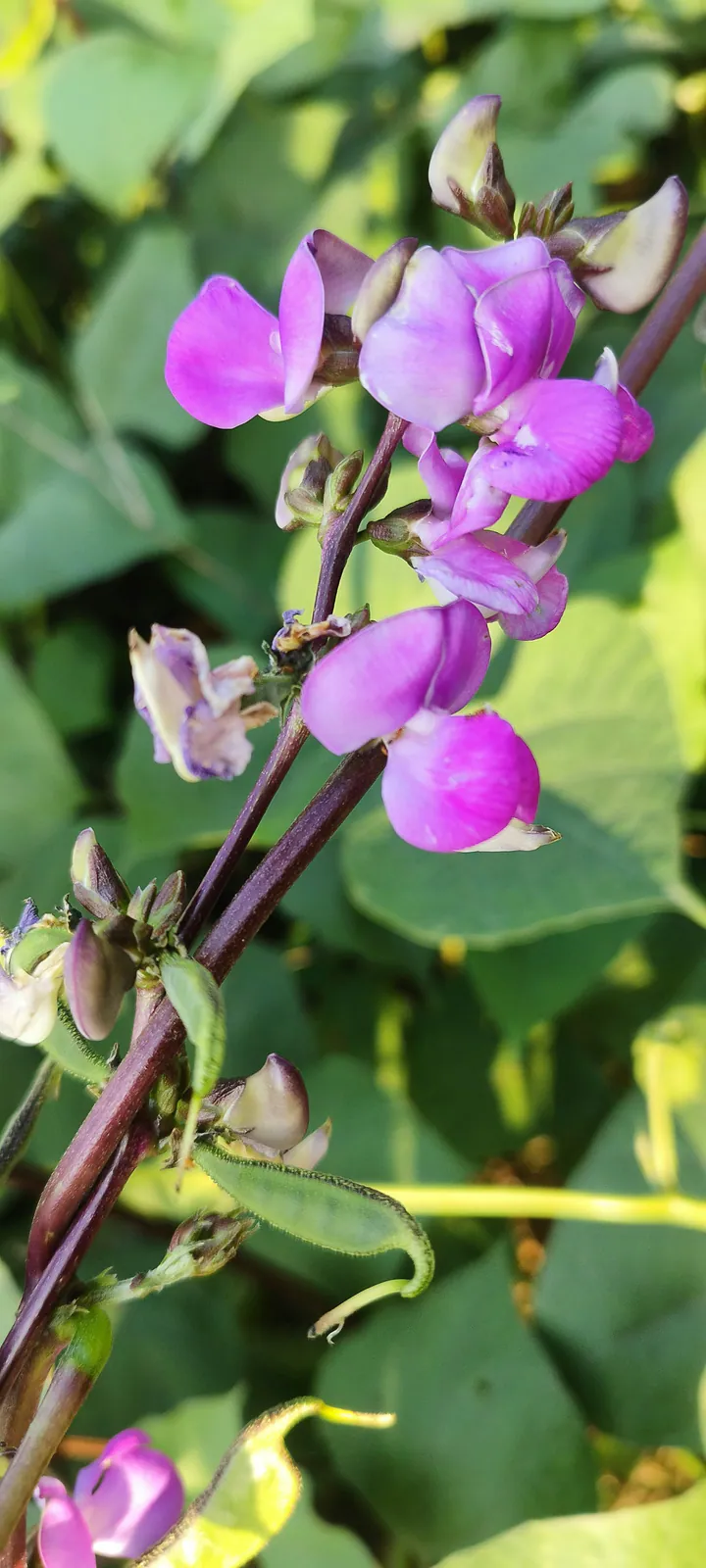
Beans most often refer to the common bean (Phaseolus vulgaris), a warm-season annual legume of the pea family (Fabaceae) cultivated worldwide for its pods and edible seeds. Domesticated in the Americas (with the main domestication centers in Mesoamerica and the Andes) and widely dispersed after the Columbian Exchange, it is grown both as bushy, determinate plants and as climbers that require support. Plants bear alternate trifoliate leaves and produce papilionaceous (pea-like) flowers, usually white, pink or purple, followed by elongated pods containing several seeds. Seed size, shape and color vary widely from breed to breed and cultivar to cultivar, and cover many familiar commercial categories.
🌱 Detailed Care Guide
📐 Growth & Structure
📅 Phenology
🌍 Ecology
✨ Usage & Benefits
- edible
- Edible parts: fruit, seed
⚠️ Safety & Traits
🌱 Propagation
🧪 Soil & Nutrition
🐛 Pests & Diseases
📝 Expert Advice
Beans are grown in fertile, well-drained or sandy loam with good crumb structure and aeration. Avoid heavy, compact clays and waterlogged soils, which favor seed rot, root diseases and poor nodulation. Improve the soil with compost or well-decomposed manure to improve structure, drainage and moisture retention, but avoid amendments that are too rich in nitrogen (beans fix nitrogen and a surplus of nitrogen favors leaf growth to the detriment of flowering and pods). Maintain regular humidity, especially from flowering to pod filling, while avoiding prolonged saturation; raised beds are useful when drainage is marginal. Aim for a slightly acidic to neutral pH (around 6.0-7.5); lime very acid soils and ensure they contain sufficient phosphorus and potassium. Sow only when the soil is warm and workable (cold, damp soils slow down emergence and encourage rotting).
Most garden beans are best suited to direct sowing, as they don't like to have their roots disturbed (especially common and runner beans). Sow or plant only when conditions are warm and frost-free. Location and soil - Choose a warm, sunny, sheltered location; cold winds and shade reduce yields. - Soil should be fertile and well-drained, with plenty of organic matter incorporated before sowing. - Avoid freshly tilled soils (they favor leaf growth to the detriment of pods). - Beans generally perform best with a neutral pH; slightly acidic soils should be avoided. When to sow - Outdoors: sow after the last frosts, when the soil has warmed up. Cold, damp soil promotes seed rot and poor germination. - Under cover (for an earlier start): sow in deep pots or modules 2 to 4 weeks before planting, in a frost-free place. Harden off well before transplanting. - Repeat sowing every 2 to 3 weeks during the sowing period for a longer harvest. How to sow (directly) - Depth: sow seeds about 3-5 cm deep (deeper in light soils; slightly shallower in heavier, colder soils). - Moisture: water the drill/holes before sowing if the soil is dry; maintain regular moisture until emergence. Spacing (typical) - Dwarf beans (Phaseolus vulgaris, dwarf types): 10-15 cm between seeds; 40-60 cm between rows. - Climbing beans (Phaseolus vulgaris, stalked types; Phaseolus coccineus): 20-30 cm between plants; 60-90 cm between rows. Place supports at sowing time (canes/teepees/frames) and sow at base. Transplanting (if growing in pots) - Transplant only when the nights are mild and there is no risk of frost. - Handle with care, keep the root ball intact and water well. - Protect newly planted beans from the wind and late cold snaps (e.g. fleece/cloches if necessary). Early establishment and care - Keep soil weed-free and evenly moist, especially from flowering to pod formation. - Protect seedlings from slugs, snails and birds. If the term "bean" includes broad bean (Vicia faba) - Sowing period: Autumn sowing in mild regions for early crops, or spring sowing as soon as the soil can be worked. - Sow approx. 5 cm deep, 20-25 cm apart, often in staggered double rows with approx. 60 cm between rows.
Beans (Phaseolus spp.) are leguminous and can satisfy a large part of their nitrogen (N) requirements through symbiotic N fixation when effective root nodules are formed. - Before planting: Fertilization should be based on soil analysis. If organic matter is low, incorporate a modest amount of finished compost/well-decomposed manure; excessive additions may favor leaf growth to the detriment of flowering and pods. Apply the necessary phosphorus (P) and potassium (K) before planting and incorporate them into the root zone. - Nitrogen: Do not use fertilizers with high nitrogen content (they can suppress nodulation and reduce flowering and pod formation). If plants are pale early and nodulation is low, a small amount of starter nitrogen can be used at planting, but keep rates low and avoid adding nitrogen once nodules are active. - Inoculation: Where beans have not been grown recently (or where soils are new/sterile), inoculate seeds with the appropriate Rhizobium inoculant for common beans to improve nodulation and nitrogen fixation. - In season: In general, no additional fertilization is required after nodulation. If soil analysis indicates a low K content, a light lateral application of K at the start of flowering can promote pod development. - Containers/flatbeds: Use a balanced, relatively low-nitrogen (or controlled-release) fertilizer at the rates indicated on the label. Avoid frequent liquid applications with high nitrogen content. - Soil reaction and uptake: Maintain soil pH in a slightly acidic to near-neutral range (approx. 6.0-7.0) and maintain regular moisture to promote nutrient availability. - Avoid over-fertilization: Excessive fertility - especially nitrogen - promotes excessive foliage, delays maturity and can increase disease problems.
Apply a light organic mulch (approx. 2-5 cm / 1-2 in) such as clean straw, shredded leaves or finished compost only after the bean seedlings are established and the soil has warmed up. Keep the mulch a few centimetres away from the stems to prevent crown and stem rot and slug damage. Mulch conserves soil moisture, moderates temperature, suppresses weeds and reduces soil splashes on foliage (which helps limit certain leaf diseases). Avoid thick or wet mulches in cool, poorly drained conditions, as they can slow soil warming and increase rot; use a thinner layer and ensure good drainage. Maintain regular humidity and top up mulch as it decomposes, especially during flowering and pod filling.
Yes for climbing beans
📋 Additional Information
🤝 Companion Plants
These plants grow well together:
📖 View Complete Guide
For the full interactive experience with additional photos, personalized advice, and gardening tools:
Visit Aphylia →